Story ·
Secondhand First Impressions, not as good as Second Breakfast
These days, our first impressions often come secondhand. And unlike second breakfast, seconds aren't always worth savoring.
Rate this story
Join the club to give it your rings.
 Join the club
Members are talking about this story.
Sign in or join the club to read the conversation and add your voice.
Story ·
These days, our first impressions often come secondhand. And unlike second breakfast, seconds aren't always worth savoring.
Rate this story
Join the club to give it your rings.
I have a pretty vivid memory of how I first discovered Middle-earth.
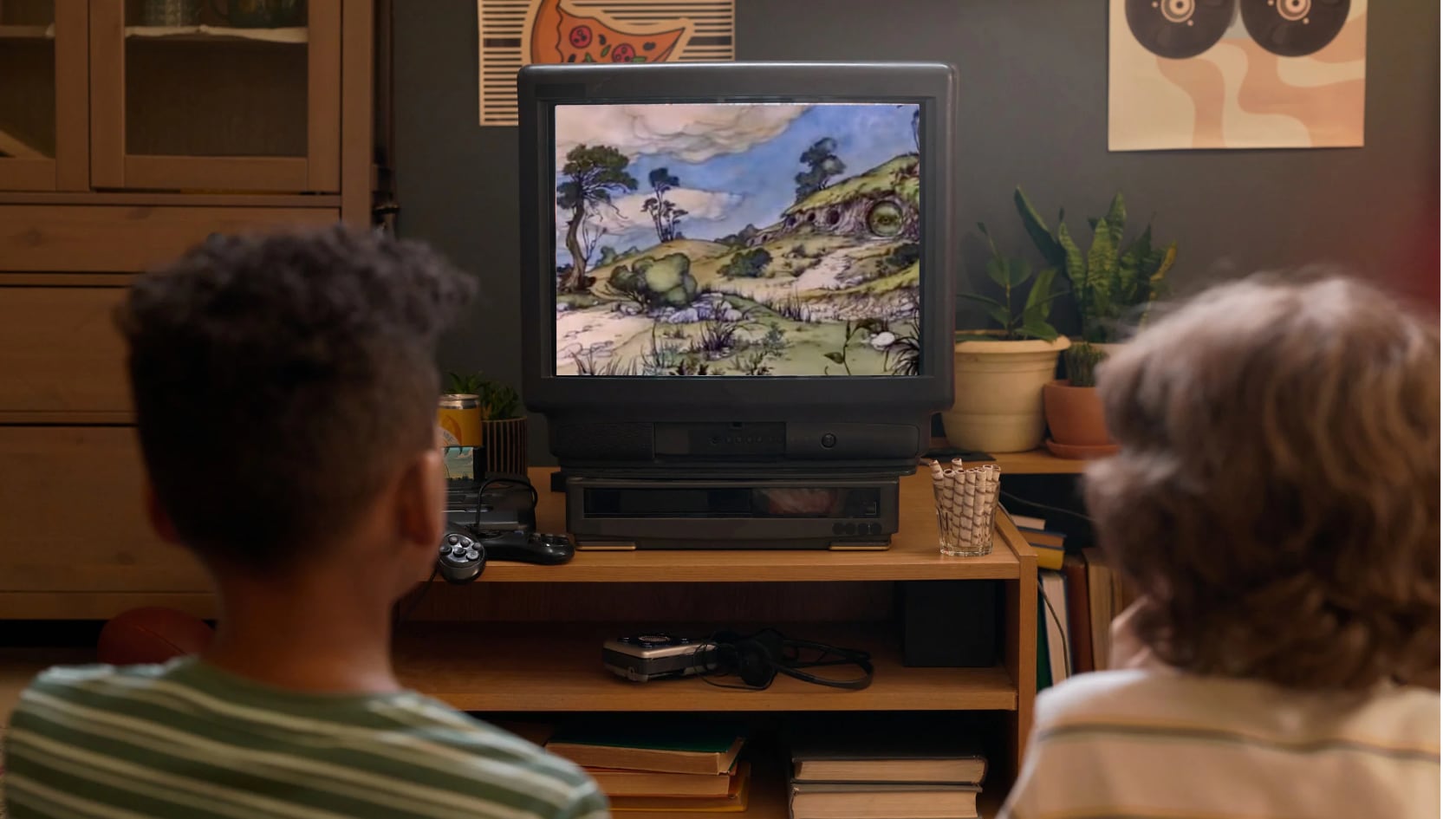
I don't remember exactly how old I was, what day it was, or even what time of year. But I remember walking into our TV room (Yes, that clichéd 80s den) and finding one of my older brothers watching, what I would later know as, the Rankin/Bass animated version of The Hobbit.
I think I heard Gollum's 'precious' line and was intrigued. I stopped. I watched. And something about it hooked me.
Maybe it was the animation style. Maybe it was the songs. Maybe it was the strange world unfolding on the television screen that I had not experienced before. Whatever it was, I was fascinated.
And here's the important part:
Nobody told me whether I was supposed to like it.
As was normal, my brother didn't acknowledge my presence, let alone give a commentary. He didn't explain whether it was faithful to Tolkien or how it compared to the source material. He was simply watching it. In fact, the mere act of him watching was probably a subtle endorsement in itself. (I think he was also doing homework at the same time)
But the content did the rest for me.
That, right there, was my introduction to Middle-earth. Not an introduction via an opinion, but instead via an interpretation.
For those of us who grew up before the internet became the center of nearly everything, discovering something new was often a wonderfully accidental experience.
You flipped through television channels and stumbled upon a movie you'd never heard of. Your parents checked TV Guide and noticed something interesting was airing that evening. Or, in this case, you wandered into a room where somebody was watching something, and suddenly you were watching it too.

Sure, we had commercials, movie trailers, newpapers, and critics. If you happened to catch Siskel and Ebert on television at the right time, you might hear two people passionately arguing about whether a movie was worth seeing.
But those opinions weren't necessarily attached to the moment of discovery. They may have supplemented it, but more often than not, it wasn't the moment of pure discovery.
I remember discovering a ridiculous television show called Sledge Hammer! in the 1980s. It was a police comedy about a detective who talked to his gun. I loved it. I have absolutely no idea why. Even now, I couldn't really explain what made me enjoy it so much.
And that's perfectly fine.
I didn't need to know whether it was critically acclaimed, popular with audiences, or destined to become a cult classic. I watched it because I found it entertaining.
Today, I wonder how often we get that opportunity. (Spoiler - we don't.)
A movie is announced. A television series is revealed. A casting decision is made. And almost immediately, the opinions begin.
It's going to be terrible. It's going to be amazing. They've ruined the franchise. They've finally gotten it right. It's disrespectful to the source material. It's the greatest thing ever.
Sometimes all of this happens before a single frame has been released. Sometimes every single one of these conversations is in our face within SECONDS of the announcement - whether it is on a device, a DM from work, etc, etc.
And here's what I find particularly fascinating:
The first time we hear about something is increasingly through somebody else's reaction to it.
You might not even know a movie exists until somebody tells you why you should hate it.
Or love it.
Societally we've become so accustomed to this that I wonder whether we even recognize it happening anymore.
I've started thinking of this phenomenon as Secondhand First Impressions.
We're discovering other people's opinions about entertainment before we discover the entertainment itself. And whether those opinions are positive or negative, they inevitably influence how we approach the experience.
It's not that people didn't have strong opinions before the internet. Of course they did. But those opinions weren't being delivered to us instantly, from countless directions, often before we'd even heard of the thing being discussed.
And nowhere do I see this more clearly than in fandom. Including, alas, Middle-earth, The Lord of the Rings, and The Hobbit, fandom.
Tolkien's work inspires extraordinary passion, and understandably so. These stories mean an enormous amount to people. There's nothing wrong with debating adaptations, questioning creative decisions, or having strong opinions about how Middle-earth is interpreted.
But I sometimes wonder whether, in our enthusiasm to protect the things we love, we forget how we came to love them in the first place.
Someone discovering Middle-earth through The Rings of Power, Peter Jackson's films, a video game, or an animated Hobbit singing about the greatest adventure might be taking their very first steps into a much larger world.
What a shame if their first encounter is somebody explaining why they've chosen the wrong doorway. I believe this happens more often than anyone would admit.
One of the ideas we've tried to embrace with the Official Fan Club of The Lord of the Rings is that everyone's journey through Middle-earth is their own.
Not everyone arrives through the same door. Not everyone enjoys the same stories, characters, interpretations, or adaptations.
And that's perfectly fine.
I'm not suggesting we stop discussing, debating, or criticizing the things we love. Those conversations can be some of the most rewarding parts of being a fan.
But perhaps we should remember that discovery itself is part of the experience.
We've spent years worrying about spoilers revealing the endings of stories. Maybe we should spend a little more time worrying about people spoiling the beginnings.
Because what if the greatest thing the internet has taken from us isn't our attention, but our ability to discover how we feel about something before someone else tells us?
Somewhere out there, a kid might be wandering into a room where their brother is watching The Hobbit.
I hope they get to stop, watch, and decide for themselves before X, Meta or some other platform tells them what to think first.
After all, we all know, a second breakfast is a wonderful thing.
A secondhand first impression? Not nearly as satisfying.
Poll
Has someone else's opinion ever put you off something you later loved?
Voting is for members. Join the club to cast yours, or sign in.
Poll
How are you fighting against secondhand first impressions?
Voting is for members. Join the club to cast yours, or sign in.